
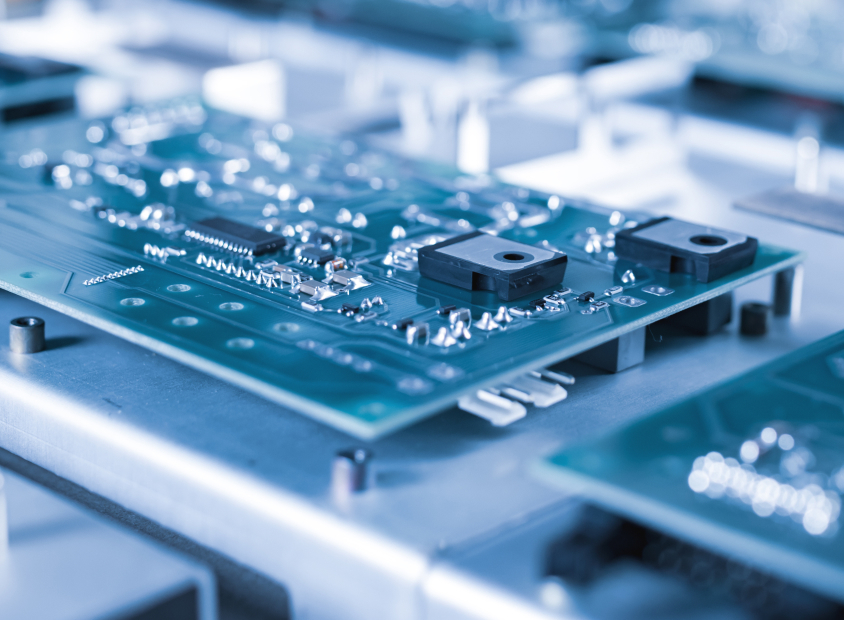
Electric vehicles (EVs) rely heavily on effective thermal management to ensure battery safety, performance and longevity. As energy densities increase and charging speeds accelerate, the thermal loads placed on battery packs, power electronics and drivetrain components continue to rise.
As adoption scales, manufacturers are under increasing pressure to deliver reliable, high-performance systems that operate safely across wide temperature ranges and duty cycles. Thermal management is therefore central to EV reliability.
While much attention is rightly placed on cooling strategies, battery chemistry and heat exchanger design, the mechanical joints that hold these systems together play a critical role in ensuring consistent thermal performance over time.
Why EV thermal management depends on mechanical stability
Battery thermal management systems (BTMS) are designed to keep cells within a desired temperature range and, critically, to minimise cell-to-cell temperature variation. This is because temperature differences across a pack lead to uneven ageing, performance imbalance and accelerated degradation.
Recent peer-reviewed research reinforces that point: thermal gradients can drive uneven ageing behaviour and degrade pack performance over time.
This is why mechanical integrity matters. Thermal performance comes from stable interfaces:
- Consistent clamping force on cold plates and spreaders
- Predictable compression of thermal interface materials (TIMs)
- Sealed joints that remain sealed through cycling
- Fasteners that retain preload under vibration and thermal expansion
Fast charging increases the thermal burden on joints and assemblies
Fast charging is a major stressor because it accelerates heat generation and can create larger thermal gradients that BTMS must manage.
A Journal of Power Sources paper on fast charging and thermal environments notes BTMS are expected to keep battery temperature at a moderate level (around ~30 °C), but during fast charging, stronger cooling is often required to restrict temperature rise and temperature variation within the battery can increase.
Similarly, NREL’s work on fast charging thermal considerations highlights that if BTMS is not designed correctly, temperatures can reach abuse conditions and potentially lead toward thermal runaway risk.
Even when thermal runaway is not the issue, the practical consequence is clear: fast charging pushes more thermal cycling, more expansion/contraction, and more demand for consistent clamp loads across many interfaces. That mechanical reality shows up in the joint.
The joint-integrity problem - thermal cycling and lightweight materials
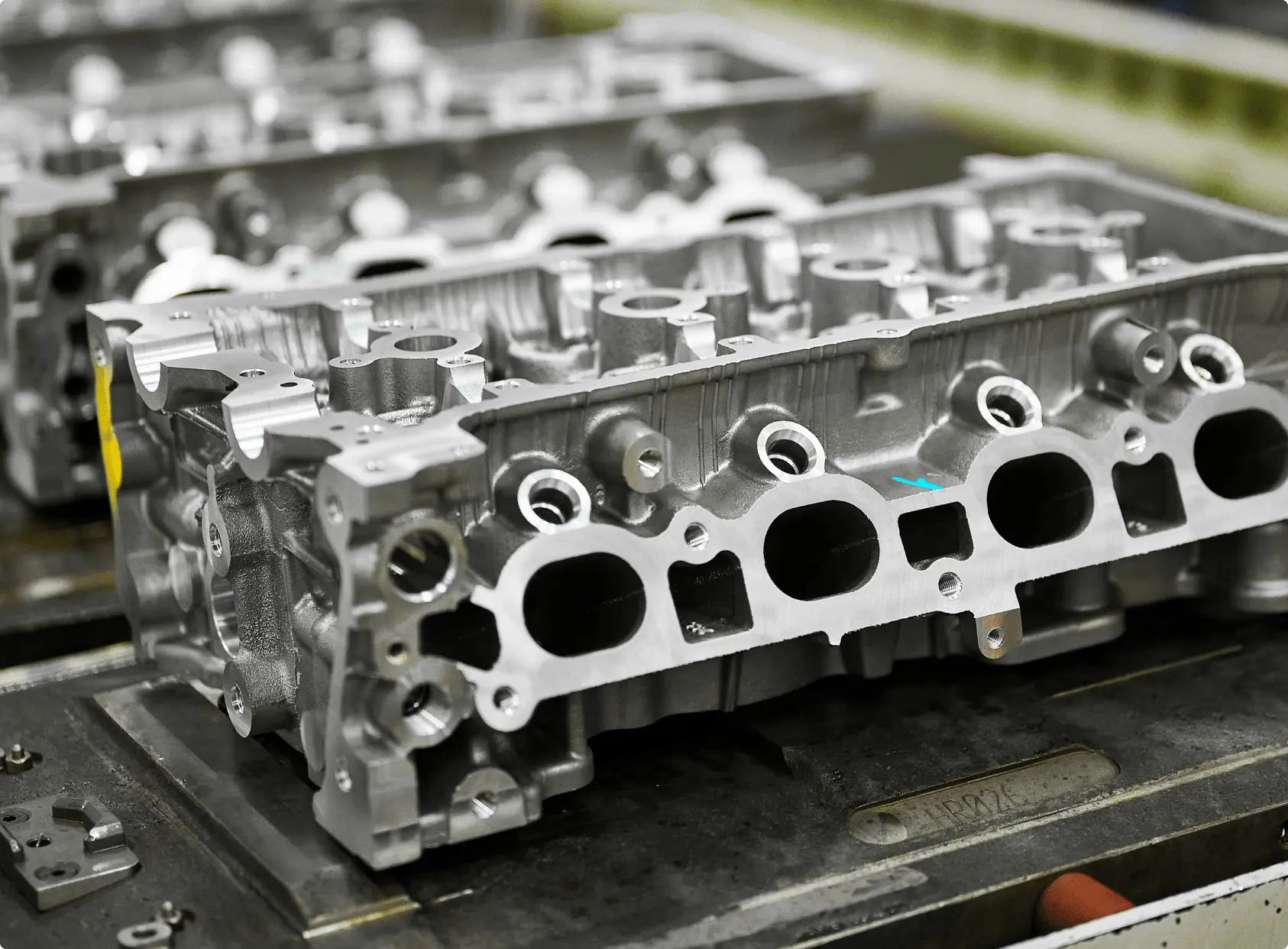
EV battery systems are increasingly built from lightweight, multi-material structures: aluminium housings, mixed metals, castings, stamped parts and polymer components.
Lightweighting is central to EV efficiency and range. Lightweight materials are especially important for EVs because they can offset the mass of batteries and motors and improve efficiency and all-electric range (or enable a smaller, lower-cost battery for the same range).
But lightweight alloys like aluminium are also more vulnerable at the thread level, especially under:
- Repeated thermal cycling (expansion/contraction)
- Vibration and road load inputs
- High clamp force requirements around seals and TIM stacks
- Repeated service cycles (inspection, rework, replacement)
When threads are tapped directly into softer alloys, wear and deformation can accumulate faster, torque-to-tension can become less predictable, and preload can drift. In thermal systems, that can translate into:
- Loss of compression on TIMs → reduced heat transfer
- Micro-gapping → hotspots and temperature non-uniformity
- Seal relaxation → leak paths in cooling loops
- Longer maintenance events when threads strip or repair is needed
So the question becomes, how do you keep a lightweight EV thermal system mechanically repeatable across lifecycle thermal abuse?
How wire thread inserts preserve joint integrity in EV thermal management
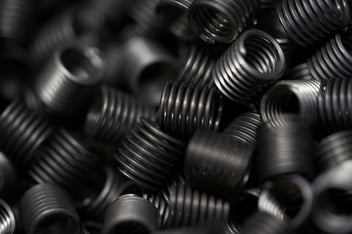
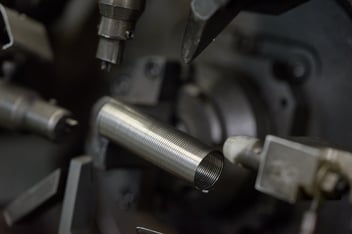
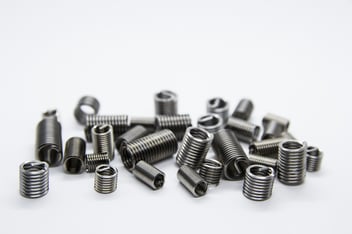
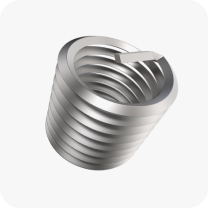
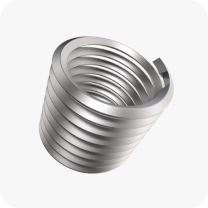
Wire thread inserts create a hardened, wear-resistant threaded interface within the parent material. Instead of the bolt repeatedly loading and wearing the base alloy threads, the insert takes the wear and provides a consistent thread form. In EV thermal management assemblies, this helps in three practical ways.
More stable preload over thermal cycling
Thermal cycling challenges preload consistency. Inserts improve thread durability and reduce thread deformation in lightweight alloys, helping the joint maintain clamp force more predictably through repeated heat-up/cool-down cycles.
Improved resistance to service wear
EV battery and thermal assemblies often require inspection and rework over life. Inserts protect the parent material from thread stripping and wear, reducing the chance that a simple service action becomes a time-consuming repair.
Better repeatability for high-volume production
As manufacturers scale, variability becomes the enemy. A consistent threaded interface supports more consistent torque behaviour, reducing rework risk and supporting stable manufacturing outcomes (especially important where thermal sealing and compression stacks are sensitive).
Joint reliability engineered for EV thermal performance
Thermal management systems are only as reliable as the joints that keep them sealed, clamped and repeatable through cycling.
KATO Advanex wire thread inserts help EV manufacturers preserve joint integrity in lightweight battery enclosures, cooling assemblies and power electronics housings by providing a durable, consistent threaded interface designed for demanding environments including vibration, frequent service and thermal cycling.
Whether you are designing for high-volume EV production, improving pack serviceability, or protecting critical thermal interfaces from preload loss, KATO Advanex helps you build thermal systems that remain mechanically stable (and therefore thermally reliable) across the full vehicle lifecycle. Download our guide below to find out more.